ZillaSIEM™ protects the ZillaAI™ operating layer.
ZillaSIEM™ is the local SIEM/NDR direction behind Sentinel: a practical telemetry, enrichment, detection, analyst-workflow, and operational-validation platform designed for local AI infrastructure and owned network visibility.
Local defense for AI-assisted operations.
The whitepaper frames ZillaSIEM™ as a living engineering environment, not a finished boxed product. The public page keeps that message high-level: visibility, validation, and adaptive defense around systems the operator trusts.
AI orchestration raises the value of telemetry.
As ZillaAI™ becomes more capable and more connected to real workflows, Sentinel needs stronger awareness around the infrastructure, data paths, services, and trust boundaries that support it. ZillaSIEM™ is the security and observability answer to that requirement.
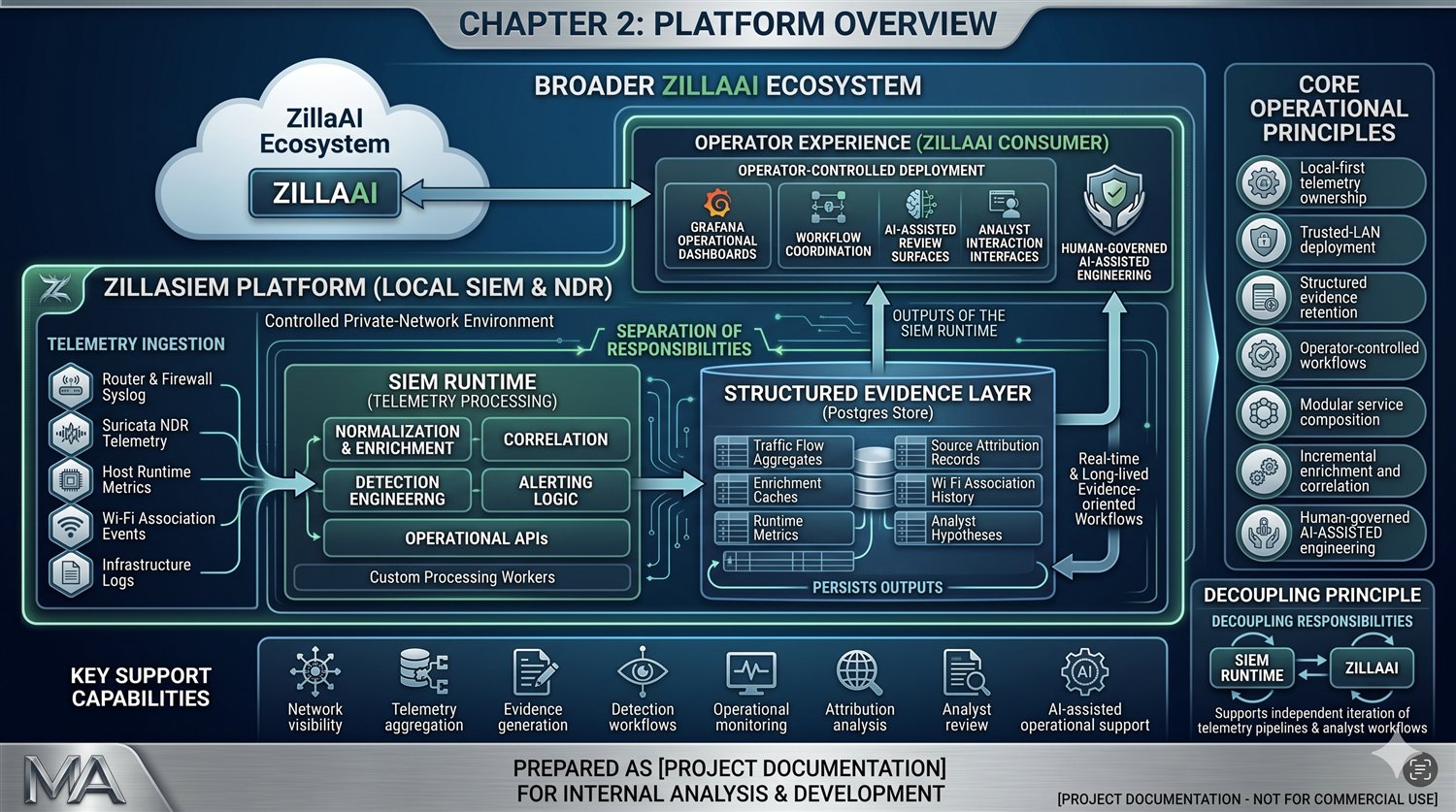
Observe
Collect network, runtime, endpoint, infrastructure, and service evidence from the local operating environment.
Contextualize
Correlate raw events with device identity, known assets, expected behavior, threat context, and operator-maintained knowledge.
Decide
Turn signals into reviewable findings, hypotheses, evidence bundles, and approval-gated next actions.
What Sentinel should gain from ZillaSIEM™.
ZillaAI™ should not own every SIEM runtime detail. Sentinel should consume ZillaSIEM™ through clear summaries, evidence APIs, analyst outputs, and approval-oriented tasks while ZillaSIEM™ owns the heavy telemetry platform.
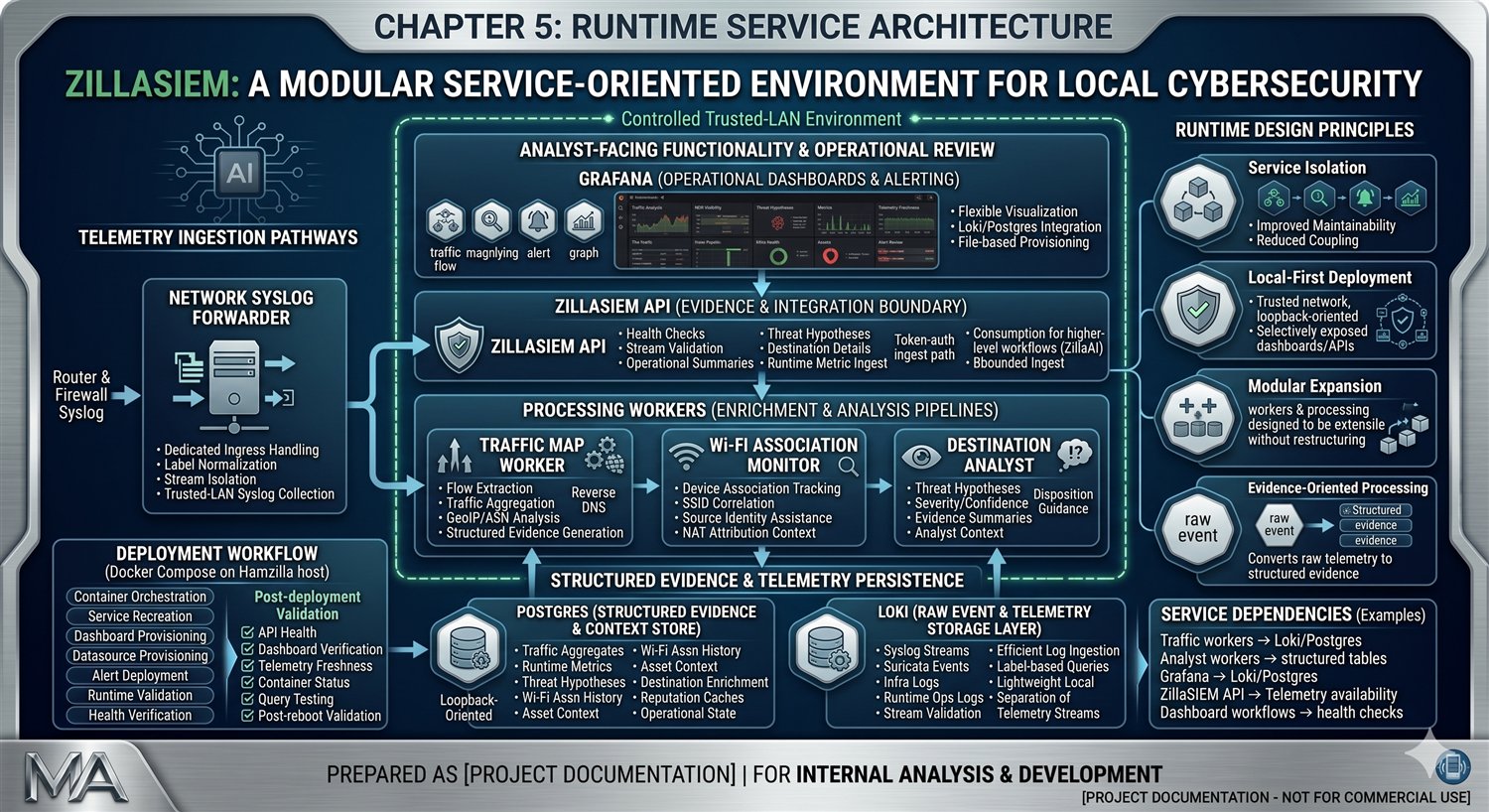
Modular services with explicit boundaries.
The target architecture separates collection, storage, enrichment, detection, dashboards, and analyst logic so the SIEM can be developed and validated without forcing unrelated ZillaAI™ redeploys.
Local telemetry intake
Network, syslog, endpoint, infrastructure, and runtime observations feeding a durable evidence layer.
Signals and hypotheses
Rules, anomaly views, learned hypotheses, and analyst findings that separate evidence from inference.
Identity and context
Device inventory, observed traffic, endpoint posture, expected destinations, and source identity confidence.
Audit-ready retention
Structured records, dashboard snapshots, investigation notes, and reviewable proof of what was observed.
Elias / Sentinel review
AI-assisted triage that recommends next checks while clearly labeling confidence, gaps, and required validation.
Approval-first response
Future remediation should remain bounded, explainable, and approval-gated rather than silently changing the environment.
Evolution path from visibility to governed response.
The whitepaper roadmap graphic is converted here into a public-facing capability sequence that keeps details safe while showing the direction of travel.
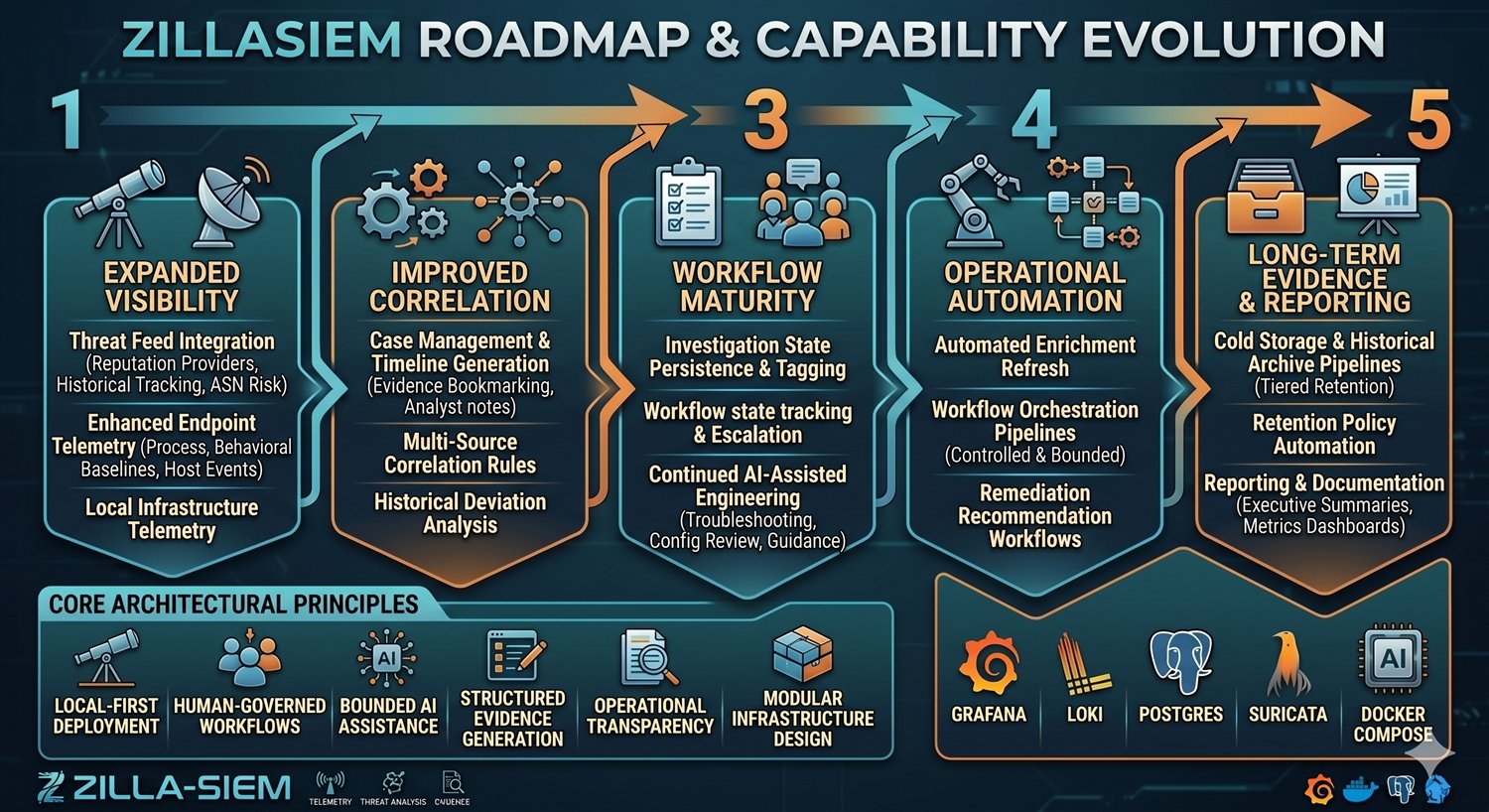
Roadmap graphic adapted from the ZillaSIEM™ whitepaper for public project-page use.
Stabilized telemetry foundation
Make core collection, storage, dashboards, runtime health, and freshness indicators dependable before expanding automation.
Identity and enrichment layer
Improve asset identity, source attribution, expected-destination context, endpoint posture, and confidence scoring.
Analyst workflow integration
Move findings into Sentinel as reviewable summaries, investigation queues, evidence views, and dispatchable follow-up tasks.
AI-assisted investigation
Use local or approved AI to summarize evidence, identify gaps, suggest checks, and separate observation from inference.
Approval-gated response
Only after evidence quality is strong, add bounded containment or remediation playbooks that require explicit operator approval.
From raw signal to reviewable decision.
The public ZillaSIEM™ story should show the workflow pattern: collect evidence, enrich it, detect important changes, produce analyst findings, and route decisions through Sentinel and Vector.
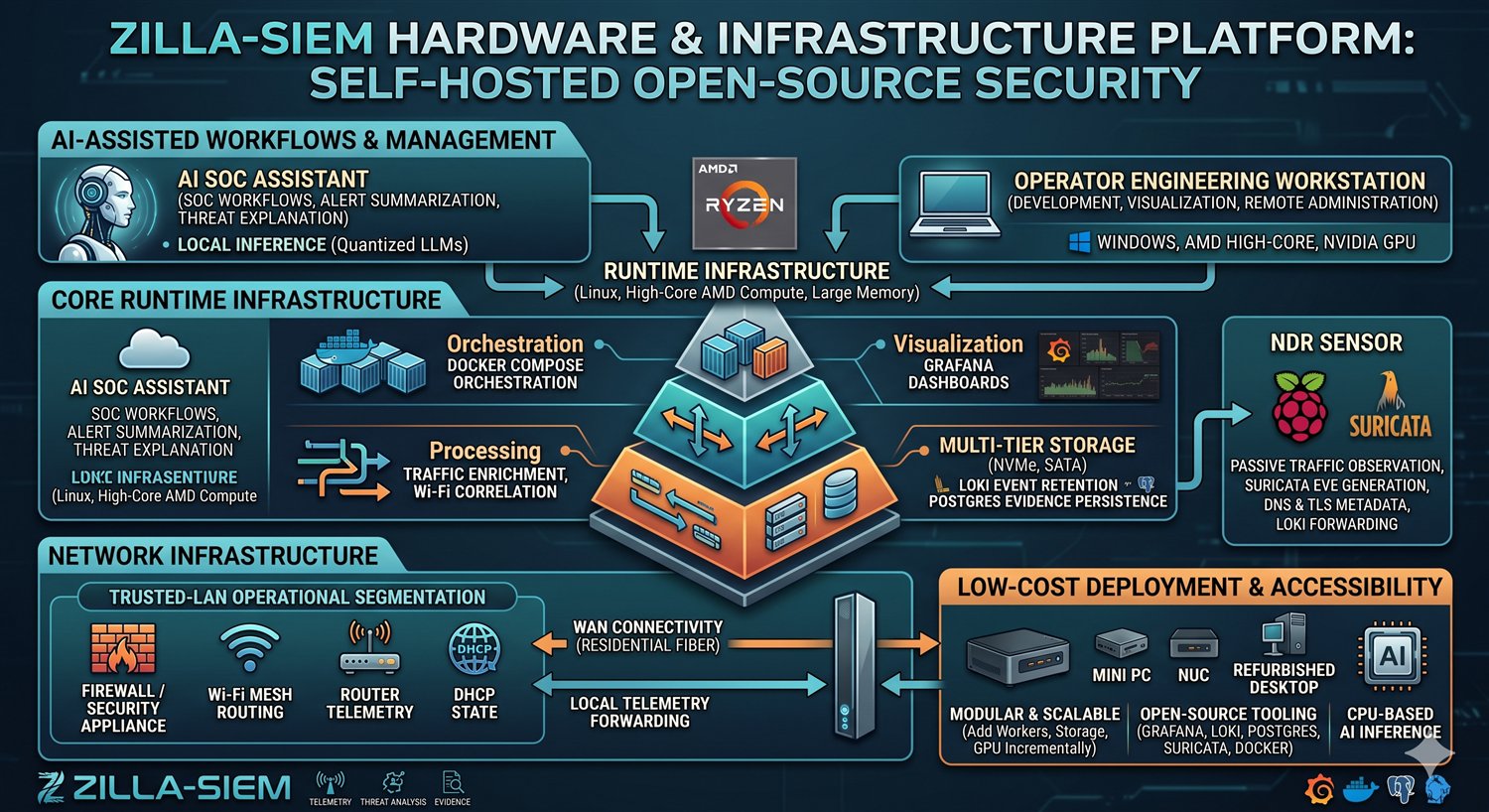
Practical local infrastructure, not enterprise theater.
The project direction emphasizes realistic local deployments, open-source tools, commodity hardware, and incremental capability growth. The point is useful operational visibility that can be understood, restored, and improved.
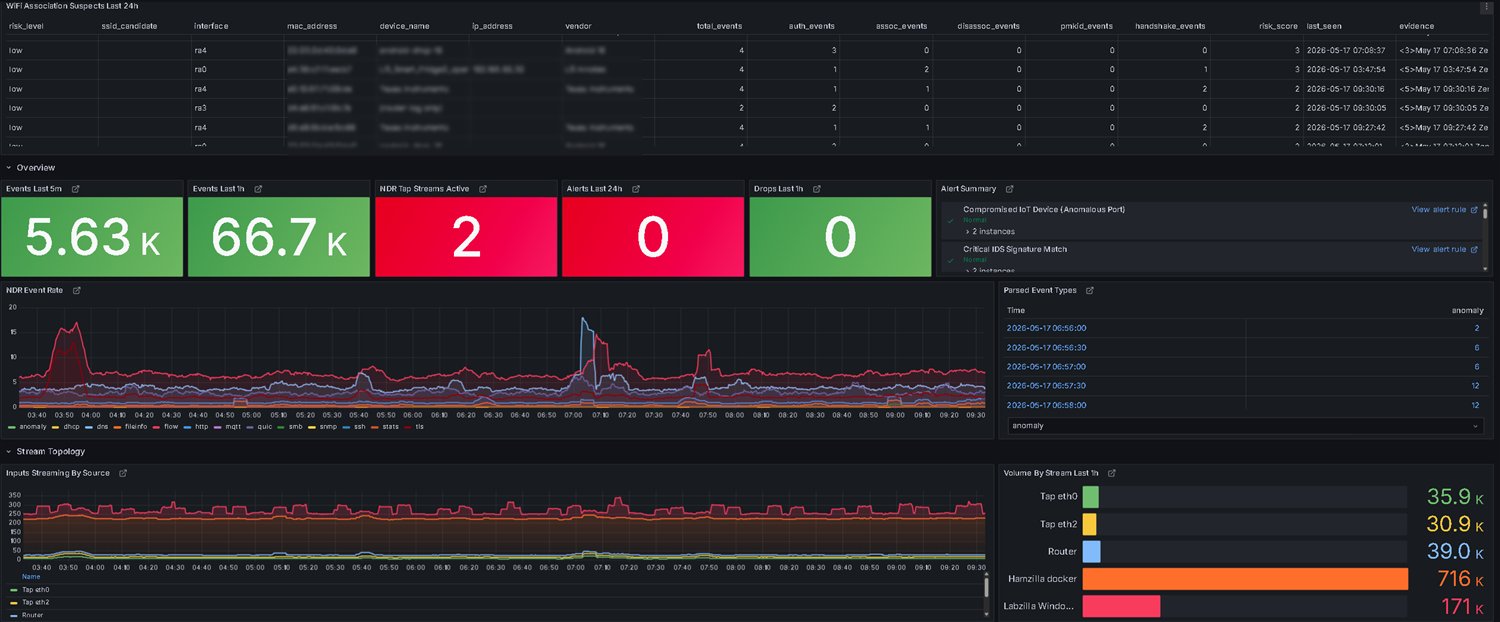
Dashboard views should make freshness, gaps, and confidence visible so operators do not mistake missing data for healthy state.
Runtime architecture should remain modular enough for ZillaSIEM™ to mature as a standalone sibling project while Sentinel keeps the operator-facing summary and decision layer.